
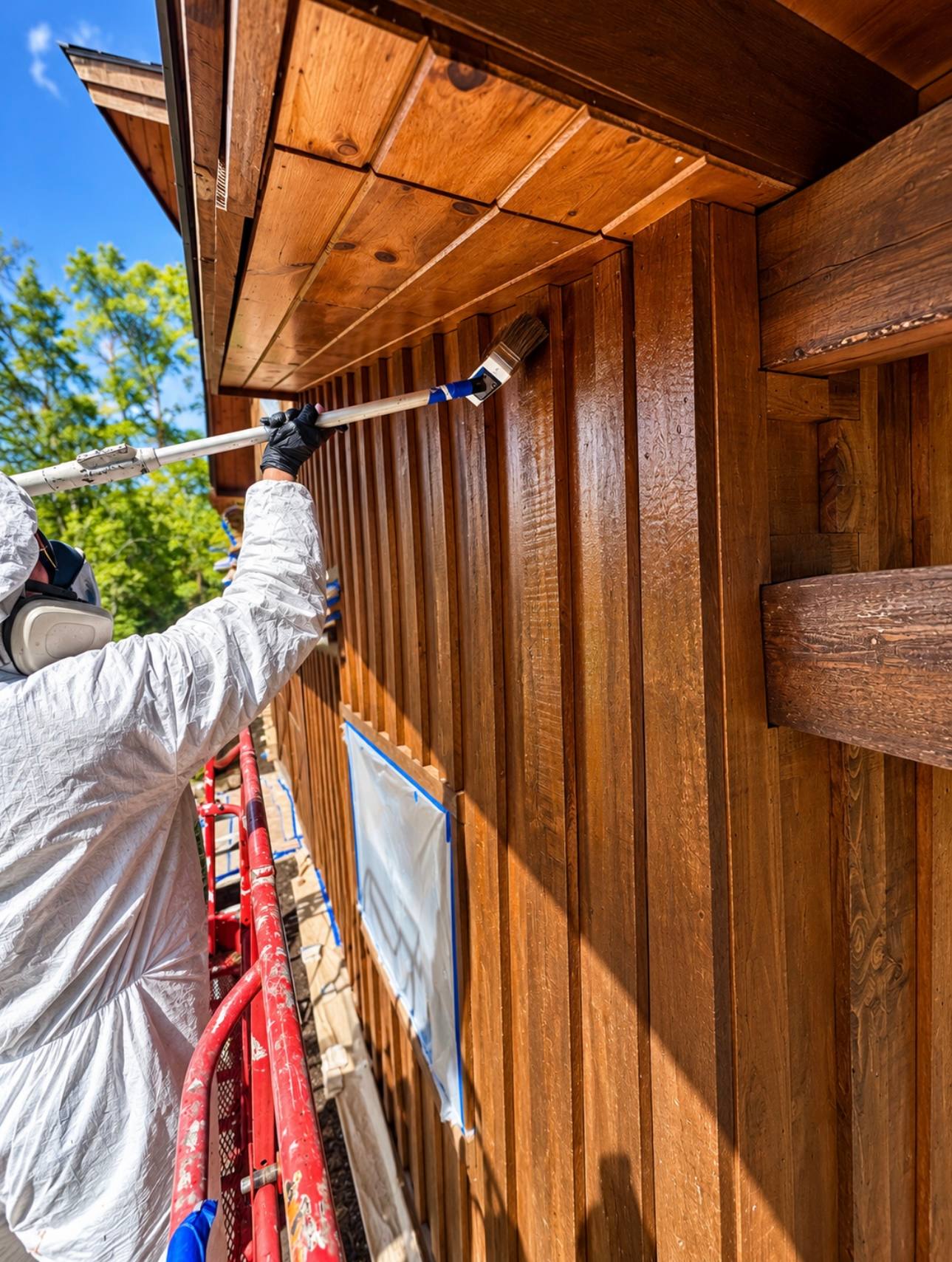
Wood Finishes That Highlight Natural Grain
Interior & Exterior Wood Staining in Mooresville for trim, doors, and architectural wood elements requiring custom color finishes
Wood staining reveals the grain pattern and natural color variation in wood surfaces while adding a protective finish that prevents moisture damage and wear. Interior trim, doors, and exterior architectural elements across Myers Park, South Park, and Lake Norman custom homes require stain finishes that match design specifications and coordinate with painted surfaces throughout the property. The stain penetrates the wood rather than sitting on top like paint, which means the wood texture remains visible and the finish develops depth that solid colors can't replicate.
Pristine Painting stains interior and exterior wood elements for residential properties in the Charlotte area, applying multi-coat finishes that protect wood while maintaining its natural appearance. The process includes wood type assessment to determine how the material will absorb stain, surface preparation and sanding to open the grain, and color selection that coordinates with the overall design scheme before any stain is applied.
Request a color consultation to review stain options and select finishes that complement your home's design.
How Wood Staining Addresses Finish Requirements
Wood staining begins with sanding the surface to remove any existing finish and expose clean wood that will absorb stain evenly, then applies the stain in thin coats that are wiped to control color depth and prevent blotching. Different wood species absorb stain at different rates, which means oak will show more grain contrast than maple, and pine requires pre-treatment to prevent uneven color absorption that creates dark splotches.
After staining is complete, the wood shows consistent color across the entire surface, visible grain patterns that add texture and visual interest, and a finish that feels smooth without the plastic coating appearance that heavy paint creates. The stain deepens the wood's natural color while allowing the grain to remain the dominant visual element, and the protective topcoat seals the surface against moisture and handling wear.
Exterior wood staining peaks during spring and fall when temperature and humidity levels allow the stain to cure properly, while interior staining projects support winter scheduling when exterior painting declines. High-end finishes in custom homes often require multiple stain coats to achieve the desired color depth, followed by clear topcoats that add durability without altering the color.
Questions Before Starting Your Project
Homeowners selecting finishes for wood elements typically ask about application methods and how stain performs compared to paint.
What's the difference between staining and painting wood trim?
Stain penetrates the wood and lets the grain show through while adding color, whereas paint covers the wood completely and hides all texture, which makes stain the preferred choice when the wood grain itself is a design feature.
How is wood prepared before stain application?
The surface is sanded to remove old finish and smooth rough areas, then cleaned of all dust so the stain absorbs evenly without contamination that would create spotty color or prevent proper adhesion.
Why do some wood species require pre-treatment before staining?
Softwoods like pine have uneven density that causes some areas to absorb more stain than others, creating blotches, so a wood conditioner is applied first to equalize absorption and produce uniform color.
How does Charlotte's humidity affect exterior wood stain projects?
High humidity slows the drying process and can prevent stain from curing properly, which is why spring and fall offer the most consistent conditions for exterior staining when temperatures are moderate and humidity is lower.
What maintenance does stained wood require over time?
Exterior stained wood needs recoating every few years as UV exposure fades the color and weather degrades the protective topcoat, while interior stained trim requires only cleaning unless physical damage occurs.
Pristine Painting applies wood stain finishes to interior trim and exterior architectural elements throughout the Lake Norman region, coordinating colors with the broader design plan for residential properties. Schedule a project consultation to discuss wood finishing options and integrate staining into your renovation scope.