
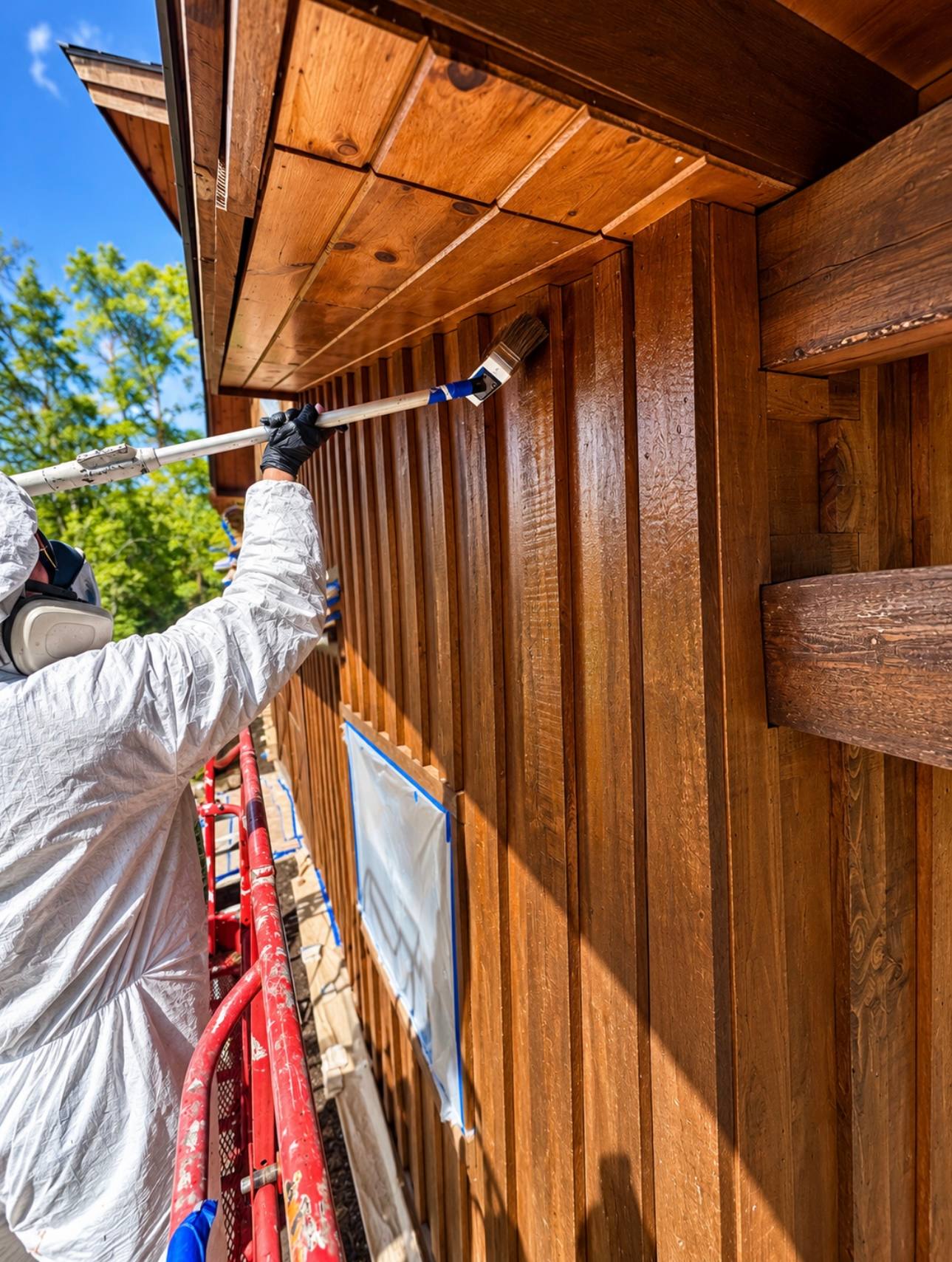
Wood Surfaces Protected Against Seasonal Stress
Deck & Fence Staining in Mooresville for outdoor wood exposed to Carolina freeze-thaw cycles and summer humidity
Untreated deck boards and fence pickets absorb moisture during humid Carolina summers, then experience freeze-thaw expansion as winter temperatures drop, causing splits, warping, and accelerated rot that shortens wood lifespan by years. Pristine Painting stains and finishes decks and fences across Mooresville, Lake Norman, Huntersville, and Cornelius properties where outdoor wood structures face constant exposure to weather extremes. High-end residential communities in these areas expect stain durability that lasts multiple seasons without early graying, peeling, or water absorption that signals coating failure.
The staining process begins with surface assessment to identify wood damage, followed by pressure washing that removes dirt, mildew, old coatings, and surface contaminants preventing stain penetration. Stain selection depends on wood type, exposure level, and whether the goal is preserving natural grain or adding opacity for color consistency. Multi-coat application follows, with deck boards and fence pickets each receiving coverage appropriate to their grain orientation and weather exposure.
Schedule a property assessment to evaluate current wood condition and determine whether repairs are needed before stain application begins.
What Proper Staining Actually Accomplishes
Deck and fence staining does more than change wood color—it seals the substrate against moisture infiltration, slows UV degradation that causes graying, and reduces the expansion-contraction cycles that split boards and loosen fasteners. Penetrating stains soak into wood fibers rather than sitting on the surface like paint, allowing the material to breathe while still repelling water. Application timing matters because wood moisture content affects stain absorption—pressure-washed surfaces must dry completely, sometimes requiring several days depending on humidity and sun exposure, before staining produces consistent penetration and color.
After staining finishes, deck boards and fence pickets display uniform color without blotchy absorption patterns or missed sections. Water beads on the surface rather than soaking in immediately, indicating proper sealer penetration. The wood grain remains visible under semi-transparent stains, while solid stains provide opacity similar to paint but with better breathability. Properly stained surfaces resist early graying and maintain color consistency through seasonal weather changes rather than fading within months.
Spring through fall represents the optimal staining window when temperatures support proper cure and overnight dew doesn't interfere with drying. Winter staining isn't practical across Mooresville and Lake Norman areas due to freeze risk during the cure period, but scheduling projects during shoulder seasons—late spring or early fall—often provides better crew availability than peak summer months.
Frequently Asked Questions About Deck and Fence Staining
Property owners across the Lake Norman region and Charlotte metro area ask similar questions about staining durability, timing, and preparation. These answers clarify what the process involves and what results to expect.
What does surface assessment identify before staining?
The inspection checks for wood rot, loose boards, protruding nails, and structural issues that need repair before staining—applying finish over damaged wood doesn't fix underlying problems and wastes coating material.
How does pressure washing prepare wood for stain?
High-pressure water strips away dirt, mildew, failed coatings, and weathered surface fibers, exposing fresh wood that absorbs stain evenly rather than creating blotchy penetration patterns.
Why does Carolina weather require quality stain products?
Freeze-thaw cycles and high humidity demand stains with strong moisture resistance and UV protection—cheaper products fail quickly, requiring complete reapplication within one or two seasons instead of lasting several years.
When should deck and fence staining be scheduled in Mooresville?
Late spring after pollen season or early fall before temperatures drop provides the best weather windows, with warm days and low humidity that support proper stain cure.
What's the difference between transparent, semi-transparent, and solid stains?
Transparent stains offer minimal color change while sealing wood, semi-transparent stains add color while showing grain, and solid stains provide opaque coverage similar to paint but with better breathability for dimensional lumber.
Pristine Painting schedules deck and fence staining across Mooresville, Lake Norman, and surrounding Charlotte properties during seasonal weather windows that allow optimal curing. Reach out to discuss your wood type, current condition, and stain preferences for accurate project planning and timeline estimates.